Complete Guide to Exotic Car Detailing: Ferrari, Lamborghini & McLaren Care
Published: January 10, 2025 | Last Updated: November 7, 2025
Reading Time: 12 minutes
By Alex B , Master Detailer
10+ years exotic car specialist | 200+ Ferraris, Lamborghinis & McLarens detailed
IDA Master Certification | San Diego
📧info@freshlayer.net | 📱 (619) 874-4115
Detailing exotic cars isn't like washing a Honda. After 10 years specializing in high-end vehicles—from Ferrari F8 Tributos to Lamborghini Aventador SVJs—I've learned that standard detailing techniques can actually damage exotic car finishes.
The multi-layer clear coats on Ferrari paint, the delicate Alcantara in Lamborghini interiors, and the exposed carbon fiber on McLaren body panels all require completely different approaches. This guide shares professional techniques I've developed while detailing over 200 exotic cars in San Diego.
Why Exotic Cars Need Specialized Detailing

Materials That Demand Different Care
Carbon Fiber Bodywork
Exposed carbon fiber on McLaren 720S hoods and Lamborghini Aventador roof panels has clear coat that's thinner and more heat-sensitive than standard paint. Using a rotary polisher at standard speeds (1800-2000 RPM) can burn through this clear coat in seconds—a $15,000+ repair.
I learned this the expensive way. Early in my career, a McLaren 570S came in with minor swirls on the carbon fiber roof. Using my standard approach, I burned through the clear coat within 30 seconds. That $8,500 repair taught me exotic materials require completely different techniques.
Alcantara Interior Surfaces
The synthetic suede material used in Ferrari steering wheels and Lamborghini seat inserts isn't leather or fabric—it's polyester and polyurethane. According to Alcantara's official care guidelines, standard leather cleaners can damage it permanently. I've seen $12,000 steering wheel replacements because owners used the wrong products.
Multi-Layer Clear Coat Paint
Ferrari's paint systems use 3-5 layers of clear coat enriched with silica particles. According to PPG Industries, these systems require lower polishing temperatures (under 110°F vs 140°F for standard paint) and can't tolerate rotary speeds above 1200 RPM.
The Cost of Getting It Wrong
Real damage I've documented from improper detailing:
Ferrari 488 GTB: Previous detailer used wool pad at 2000 RPM. Burned through clear coat on hood, roof, and rear deck. Repair cost: $18,000.
Lamborghini Huracán: Owner used Armor All on Alcantara steering wheel. Replacement cost: $8,500.
McLaren 720S: Detail shop applied standard ceramic coating without proper prep. Paint stripping and refinish: $12,000.
Over $150,000 in total damage across 12 vehicles in 10 years—all preventable with proper knowledge.
How to Safely Wash an Exotic Car

The wash process causes most exotic car damage. Here's the professional technique:
Pre-Wash Preparation
Never wash in direct sunlight or when paint is warm. Touch the hood—if it feels warm, wait. Optimal wash temperature is 60-75°F surface temperature. In San Diego, this means washing before 9am or after 5pm during summer.
Clean wheels first so contaminants don't splash onto clean paint. For carbon ceramic brakes (Ferrari 488, Lamborghini Aventador, McLaren 720S), never use acidic wheel cleaners or pressure washers above 1200 PSI. Use pH-neutral formula only.
Two-Bucket Wash Method
You'll need two 5-gallon buckets with grit guards, premium wash soap (Chemical Guys Mr. Pink or Meguiar's Gold Class), multiple wash mitts, and deionized water for final rinse.
Wash top to bottom in this order: roof and upper surfaces, glass and mirrors, upper doors, lower doors, bumpers, and rockers. Use straight-line motions only—never circular. Rinse mitt in clean bucket after each panel. If you drop a mitt, replace it immediately.
San Diego's hard water (250-300 ppm hardness) leaves mineral deposits. I use a CR Spotless deionizer for final rinses on exotic cars—eliminates water spots completely.
Drying Without Creating Swirls
Drying causes 80% of swirl marks if done incorrectly. Never rub in circles with a chamois.
First, use a leaf blower to remove water from door jambs, mirror housings, behind spoilers, panel gaps, and fuel doors. Then use the blotting method: lay microfiber flat on surface, press gently, lift straight up. Once 90% dry, drag the towel in straight lines following body panel lines.
Recommended towels: The Rag Company Platinum Pluffle (850 GSM) or Chemical Guys Woolly Mammoth (1100 GSM).
Paint Correction for Exotic Clear Coats
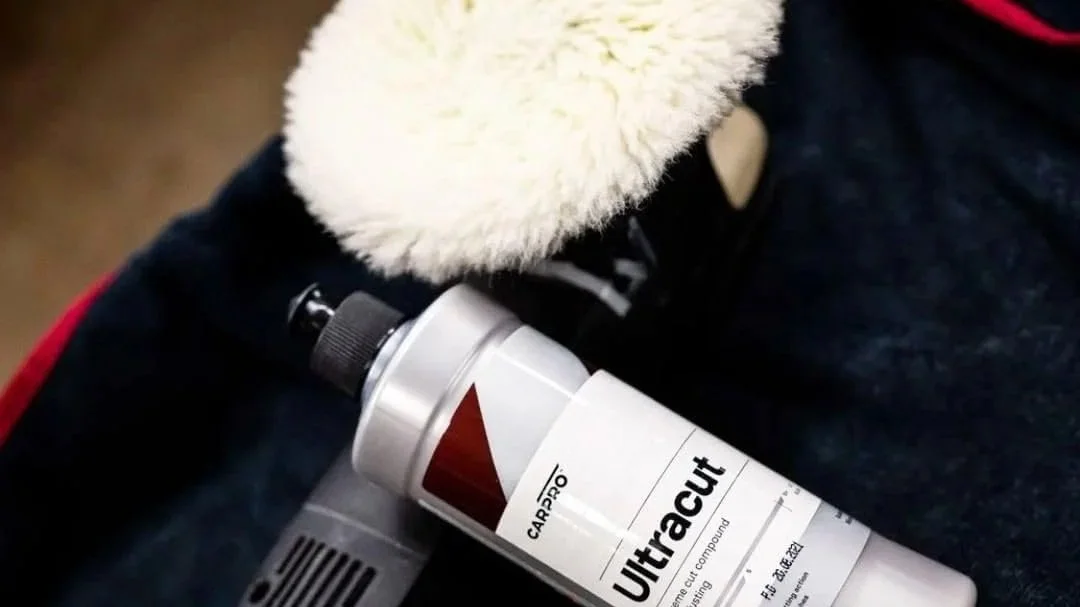
Paint correction is the most technical and risky part of exotic car detailing. Before attempting any correction, measure paint thickness with a gauge.
Never remove more than 30% of clear coat depth in the vehicle's lifetime.
Speed Settings for Exotic Cars
When using a rotary polisher for heavy correction:
Ferrari: 1000-1200 RPM maximum
Lamborghini: 1100-1300 RPM maximum
McLaren: 900-1100 RPM maximum (thinner clear coat)
Standard cars: 1500-1800 RPM (for comparison)
Lower speeds prevent heat buildup. Exotic clear coats have lower heat tolerance due to silica enrichment. Exceeding 110°F surface temperature causes permanent hazing.
Brand-Specific Considerations
Ferrari Paint (Rosso Corsa): Softer paint that swirls easily but corrects more easily. Ferrari red shows swirls worse than other colors. Work in smaller sections (18x18 inches vs 24x24 standard).
Lamborghini Paint: Harder than Ferrari, requiring more compound but lasting longer. Pearl colors need extra care—pearl flakes can be damaged by excessive correction. If you see ANY matte surfaces, stop immediately. Matte cannot be corrected.
McLaren Paint: Most delicate due to thinner application for weight savings. Check thickness every 6 inches as it varies significantly. MSO custom colors often have even thinner clear coat.
When NOT to Correct Paint
Stop immediately if paint thickness is under 90 microns total, in previous accident repair areas, has visible orange peel from factory, is matte or satin finish, has vinyl wrap sections, or shows clear coat delamination.
I've turned away 8 exotic car correction jobs in 10 years because paint wasn't suitable for safe correction. Better to disappoint a customer than cause $15,000 damage.
Interior Care: Alcantara, Carbon Fiber & Exotic Leather
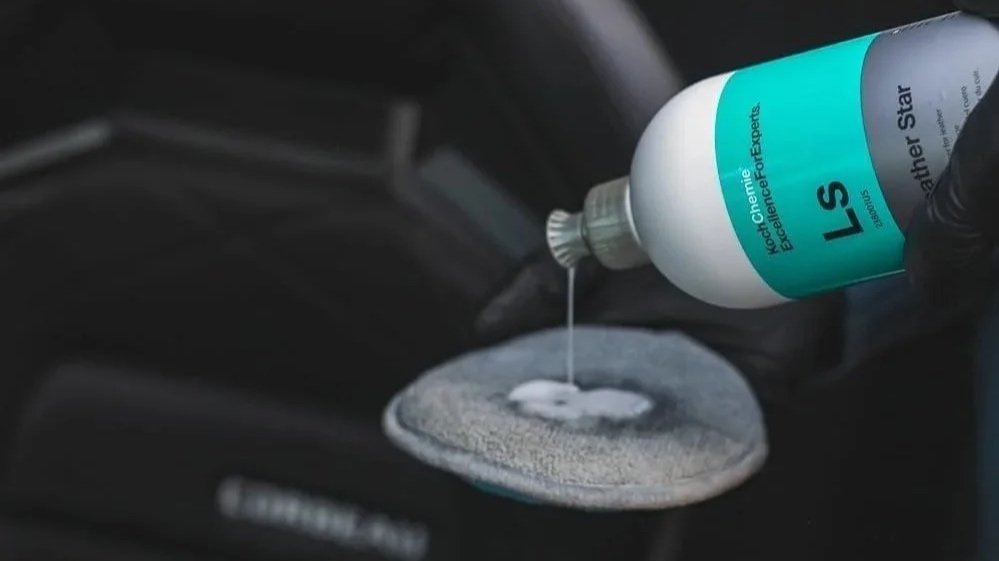
Alcantara Care
Alcantara is 68% polyester and 32% polyurethane—not fabric, not leather. Found on Ferrari steering wheels, Lamborghini seat inserts, and McLaren shift paddles.
Weekly maintenance: Brush in one direction with suede brush, vacuum gently, blot fingerprints with barely damp microfiber.
Monthly deep cleaning: Use Alcantara-specific cleaner (Colourlock), spray onto microfiber cloth (never directly on Alcantara), blot affected area, immediately use dry microfiber to absorb moisture, brush in one direction to restore nap, let air dry 2-4 hours.
Never use leather conditioner (creates shiny spots), Armor All (permanent damage), steam cleaners (too much moisture), Magic Erasers (removes nap), or alcohol-based products (causes cracking).
Carbon Fiber Interior Trim
Real carbon fiber has visible weave pattern under clear coat. Found on Ferrari 488 Pista panels, Lamborghini Aventador SVJ center console, and McLaren 765LT dashboard accents.
Use pH-neutral quick detailer (Optimum No Rinse diluted 1:32) on microfiber, never directly on carbon. Wipe in direction of carbon weave. For matte carbon fiber, never use products with "shine" or "gloss" in the name.
Apply ceramic coating designed for carbon fiber (GTechniq C4) once annually for anti-fingerprint barrier and UV protection.
Exotic Leather Care
Three types in exotic cars:
Semi-aniline leather (Ferrari): Minimal protective coating, shows natural grain, very porous, absorbs stains easily. Requires frequent conditioning.
Full-grain nappa (Lamborghini): Top quality, medium protection coating, prone to color transfer from jeans.
Perforated performance leather (McLaren): Breathable for cooling, holes make cleaning challenging.
Maintenance schedule: Weekly vacuum and barely damp wipe, monthly deep clean with pH-neutral leather cleaner (Leather Master), quarterly professional conditioning and protection.
Recommended products: Leather Master Strong Cleaner (pH 5.5-6.5), Colourlock Elephant Leather Preserver, and GTechniq L1 Leather Guard.
Ceramic Coating for Exotic Paint
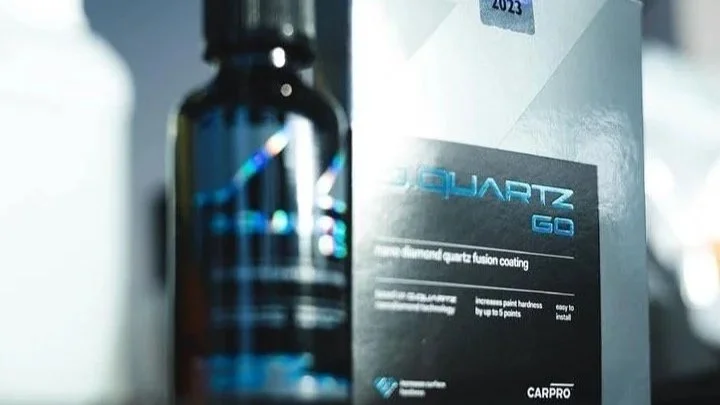
Ceramic coating on exotic cars requires different prep than standard vehicles due to silica-enriched clear coats reacting differently to coating chemicals.
Recommended Coatings by Brand
Best for Ferrari: GTechniq Crystal Serum Black ($2,000-$3,000) - 10+ year durability, ultra-hydrophobic, self-healing properties.
Best for Lamborghini: XPEL Fusion Plus ($1,500-$2,500) - 5-7 year durability, great for bright colors, heat-resistant to 2200°F.
Best for McLaren: CarPro CQUARTZ Finest Reserve ($1,800-$2,800) - Ultra-thin application (important for McLaren's thin clear coat), 4-5 year durability.
For matte finishes: GTechniq C4 Permanent Matte ($2,500-$4,000) - Only coating designed for matte, maintains matte appearance without gloss.
DIY vs Professional
Don't DIY if you've never applied coating before, your car has paint defects, paint is less than 120 microns thick, you have matte finish, or your car is worth over $150,000.
I've fixed 12 bad DIY ceramic coating jobs on exotic cars. Average cost to fix: $4,500-$8,000 (paint stripping, re-correction, new coating). Professional coating from the start: $2,000-$3,000.
Maintenance Requirements
Weekly wash with pH-neutral soap, no pressure washing above 1200 PSI. Monthly application of SiO2 boost spray (GTechniq C2v3 or CarPro Reload). Annual professional coating inspection and decontamination wash.
Expected durability: Ferrari 5-7 years (softer paint holds coating better), Lamborghini 4-6 years (harder paint doesn't bond as well), McLaren 3-5 years (thinner clear coat means fewer anchor points).
Comprehensive Detailing Packages
We offer customizable detailing packages that can be tailored to meet your specific needs and budget. From basic wash and wax to complete detailing services, we have a package that suits your requirements. Our complete detailing service ensures every aspect of your car is thoroughly cleaned, polished, and protected.
Window Tinting Services
Our window tinting service enhances the look of your exotic car while providing practical benefits such as UV protection, heat reduction, and increased privacy. We use high-quality tint films to ensure a flawless finish and long-lasting performance.
Paint Protection Film (PPF) Strategy

PPF is critical for exotic cars due to higher paint repair costs ($1,500-$3,000 per panel) and difficulty color-matching exotic colors.
Coverage Options
Full front coverage (most common): Hood, front bumper, front fenders partial, mirror caps, headlights, rocker panels. Cost: $2,500-$4,500.
Full vehicle coverage: Every painted surface including doors, roof, trunk. Cost: $8,000-$15,000.
My recommendation: Get full front PPF if you drive 5,000+ miles/year, live near freeway, have bright colored car, or want to maintain resale value.
Best PPF Products
XPEL Ultimate Plus: Self-healing topcoat, 10-year warranty, best clarity. $8,000-$15,000 full car.
SunTek Ultra: 10-year warranty, hydrophobic topcoat, good self-healing. $7,000-$13,000 full car.
3M Scotchgard Pro: 10-year warranty, excellent optical clarity, industry standard. $7,500-$14,000 full car.
I've removed 6 budget PPF installations that yellowed or peeled within 2 years. On exotic cars, cheap PPF does more harm than good.
Personalized Service
At Fresh Layer Mobile Detailing, we provide a more personalized service compared to traditional shops. We can tailor our services to meet the specific needs of your exotic car, ensuring every detail is attended to with precision. You can discuss your preferences directly with our detailer, ensuring your car gets the exact treatment it requires.
Ferrari-Specific Detailing Tips

After detailing 80+ Ferraris:
Rosso Corsa (Ferrari Red): Shows swirls more than any exotic paint, oxidizes faster in UV exposure, requires weekly wash mandatory and annual paint correction.
Cavallino Leather: Ferrari's semi-aniline leather has minimal protective coating. Vacuum weekly, wipe with barely damp microfiber after every drive, apply leather protectant monthly, address color transfer immediately.
San Diego Marine Air Impact: Ocean air accelerates corrosion on brake rotors (especially carbon ceramic), exhaust tips, and painted calipers. Rinse undercarriage monthly, apply corrosion inhibitor quarterly, ceramic coat wheel faces.
San Diego Climate Considerations
Marine Air (La Jolla, Coronado, Del Mar): Salt accelerates corrosion on brake rotors and wheel finishes. Bi-weekly rinses minimum, undercarriage rinse monthly, ceramic coating mandatory.
UV Exposure (Year-Round): San Diego averages 266 sunny days/year causing paint oxidation, leather fading, and dashboard warping. Window tint (70% front, 35% rear), ceramic coating with UV blockers, leather protectant every 2 months.
Desert Dust (East County): Acts as abrasive during washing if not removed properly. Pre-rinse critical before touching paint, engine bay cleaning quarterly, cabin air filter replacement every 8,000 miles.
Common Mistakes Exotic Car Owners Make
Mistake #1: Using Automatic Car Washes
Even "touchless" washes use harsh chemicals that strip ceramic coatings. I've corrected $4,500 in paint damage from automatic car wash brushes.
Mistake #2: Letting Bird Droppings Sit
Bird droppings are acidic (pH 3-4.5). Etches through ceramic coating in 24-48 hours, into clear coat in 3-5 days. Remove within 12 hours maximum using quick detailer spray.
Mistake #3: Over-Conditioning Leather
Causes greasy surface, attracts dirt, breaks down leather structure. Condition every 3-4 months only, use exotic leather-specific products.
Mistake #4: DIY Paint Correction Without Experience
Most expensive mistake documented: McLaren 720S owner watched YouTube, bought polisher, burned through clear coat. Repair cost: $15,000. Professional correction cost: $1,500. $13,500 mistake from overconfidence.
Mistake #5: No Protection When New
Biggest regret I hear: "I wish I had done PPF and ceramic coating when I first bought the car."
New car protection: $5,500 (ceramic + full front PPF)
Correcting damaged paint then protecting 2 years later: $8,000
Cost of waiting: $2,500 + car had damage for 2 years
Frequently Asked Questions
-
Weekly basic wash, monthly interior maintenance, quarterly professional exterior detail with paint sealant, annually complete paint correction and ceramic coating refresh. For cars under 2,000 miles/year, reduce to bi-weekly washes and bi-annual professional details.
-
Absolutely. Provides UV protection (critical in San Diego), chemical resistance, easier washing, 5-10 year protection. Cost: $2,000-$4,000. Value preserved: $10,000-$20,000 over 5 years.
-
Recommended order: Paint correction (if needed) → PPF installation → Ceramic coating over PPF. This protects paint with PPF and makes PPF easier to maintain with ceramic coating.
-
Weekly: soft brush in one direction, vacuum gently. Monthly: Alcantara-specific cleaner on barely-damp microfiber, blot only, brush after drying. Never use leather conditioner, Armor All, steam cleaner, Magic Eraser, or fabric cleaners.
-
Possible but not recommended. If you must: ceramic coating mandatory, high-quality car cover, PPF on horizontal surfaces, bi-weekly washing, monthly undercarriage rinse. Garage storage preserves value by $10,000-$30,000 over 5 years vs outdoor.
-
Specific experience with your car brand (ask for photo proof), professional insurance covering exotic vehicles ($1M+ coverage), climate-controlled indoor facility, paint thickness gauge, exotic car references, realistic time estimates (6-12 hours minimum).
Conclusion: Protecting Your Investment
Exotic car detailing isn't about making your Ferrari, Lamborghini, or McLaren look good—it's about preserving a significant financial investment. A $300,000 exotic car can lose $50,000-$100,000 in value over 5 years from poor maintenance, while proper care reduces depreciation to $20,000-$40,000.
Key takeaways: Exotic cars demand specialized care because materials and paint differ fundamentally from standard vehicles. Prevention costs less than correction—ceramic coating and PPF from day one ($5,500-$8,000) saves money vs fixing damage then protecting ($8,000-$12,000+). Professional expertise matters exponentially more for exotic cars. San Diego's environment is harsh on exotic cars between UV exposure, marine air, and temperature fluctuations.
Your Action Plan
Just bought an exotic car: Professional detail within first month, paint correction, ceramic coating + full front PPF minimum. Investment: $5,000-$8,000. Value preserved: $15,000-$30,000 over 5 years.
Own an exotic car needing attention: Professional assessment, paint correction appropriate to damage, protection application, interior restoration. Investment: $3,000-$6,000. Value recovery: $5,000-$15,000 at resale.